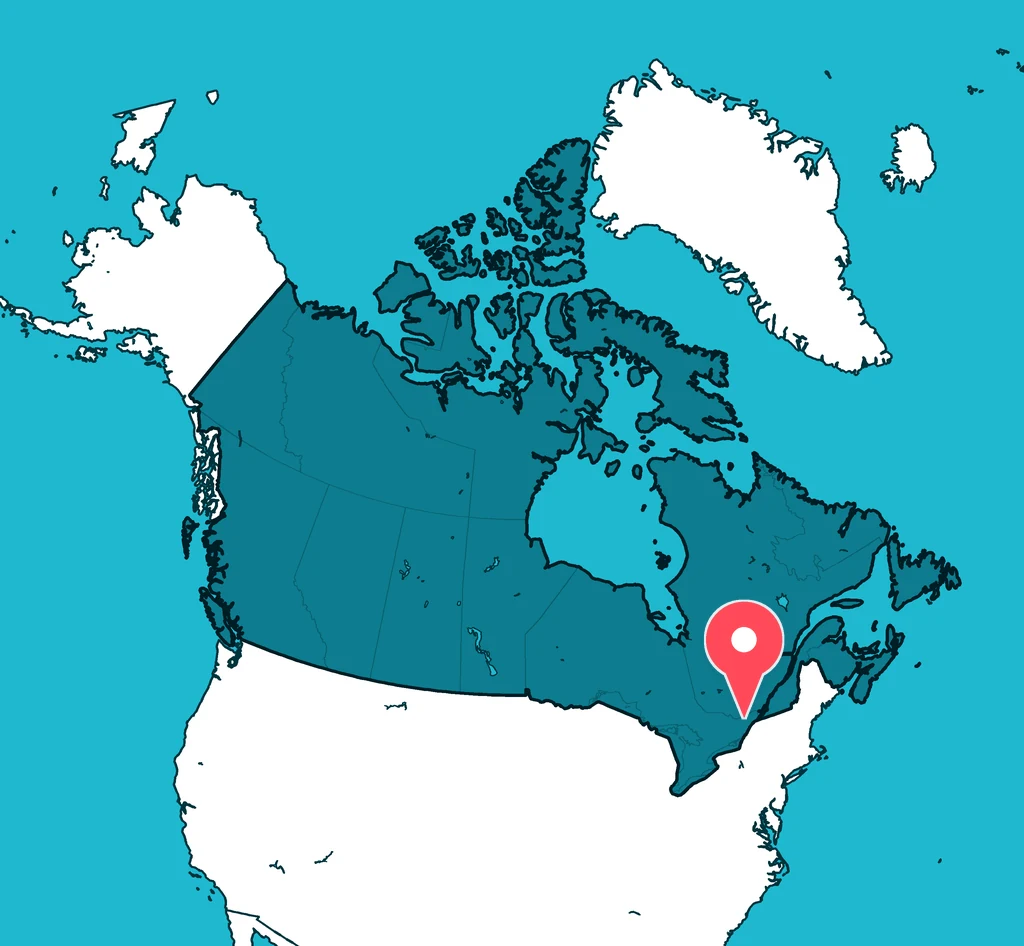
Send us the Canadian hire you are planning
Few Canadian hiring questions have a single national answer. An Ontario salary attracts CPP, EI, Employer Health Tax and WSIB. A Quebec hire pays into QPP and QPIP and must receive working documents in French. A British Columbia employee gets five paid sick days. Contact EOR Canada with the role, province and salary, and we reply with the rules and figures for that case.
Answers written by payroll people
- Cost estimates built on 2026 CRA and provincial rates
- Our fee: from USD 560 monthly for each person employed
Start with payroll or with onboarding
Either card opens the same short form; we take the detail from there.
Who signs the contract, and who files with the CRA?
We sign the employment contract as employer of record, run payroll and file with the CRA and the province. Recruiting and the daily work stay with you, and you need no corporation of your own.
For one hire or a few
Many clients start with one person in Canada and add more later. The same arrangement can carry a single engineer in Ontario for several years, or a small team spread across two or three provinces.
The cost of an Ontario salary
For a CAD 85,000 salary in Ontario in 2026, statutory employer costs bring the yearly total to CAD 93,029.25. That includes CPP, CPP2, EI, a 1.95% Employer Health Tax charge and a WSIB premium assumed at CAD 0.18 per CAD 100. Our monthly fee from USD 560, roughly CAD 790.56 using the ECB rates published on 24 September 2026, lifts the year to CAD 102,515.97.
Provincial mechanics
Payroll is withheld for the province of employment, and each province sets its own leave, holidays and notice. EOR Canada registers the payroll account with the CRA, remits source deductions by the due date, prepares the annual T4 slips and issues a Record of Employment when earnings stop. In Quebec it deals with Revenu Québec, QPP, QPIP and CNESST, and in Ontario with EHT and WSIB.
Typical requests
Employers ask what an offer at a given salary will cost, whether a non-compete is valid in Ontario, how much notice a long-serving employee is owed, and whether a Quebec contract must be in French. We also get asked about work permits, where an EOR has real limits.
Same people, month to month
The specialist who prepares your quote stays with the account after the start date, so payroll changes, leave requests and questions about notice go to someone who already knows your hire.
Built around each employee
A new graduate in Alberta and a senior manager in Quebec need different paperwork. We set the contract, notice clause, vacation entitlement and benefits for the person’s province and seniority, and we raise items such as Bill 96 French-language duties or Ontario’s non-compete ban before the offer is signed.
What working with us looks like
- A cost breakdown for your salary and province before anything is signed
- Contract drafted for the province where the person will work
- Monthly payslips and one invoice for you
- Email replies from a named specialist
The HR function you do not need to staff
Canadian HR cover without an HR hire
A software dashboard can show you a payslip, but it cannot tell you whether a probation clause will limit common-law notice or what Boxing Day on a Saturday means for pay. You get written answers on points like these from people who deal with Canadian payroll every day.
Your manager deals with the employee on the work itself. Our team deals with the employee on pay, leave, benefits and paperwork, and keeps you informed.
- Leave and vacation pay tracked per province
- Changes to CPP, EI and minimum wage applied each year
Your candidate can start
Your chosen candidate can join you in Canada before you incorporate anything, because we become the legal employer.
Send the role, the province and the proposed salary. You receive a cost breakdown in CAD and USD, a draft timeline and a list of the documents the employee will need.
Get a cost breakdown