

Employer of Record Canada
Employ someone in Ontario, Quebec or another province without incorporating in Canada. The legal employer is EOR Canada, acting as employer of record: it issues the contract, runs payroll, withholds income tax and pays CPP or QPP and EI contributions to the CRA or Revenu Québec.
Plan a hireThe client portal
Hire quickly in Canada and get each province right
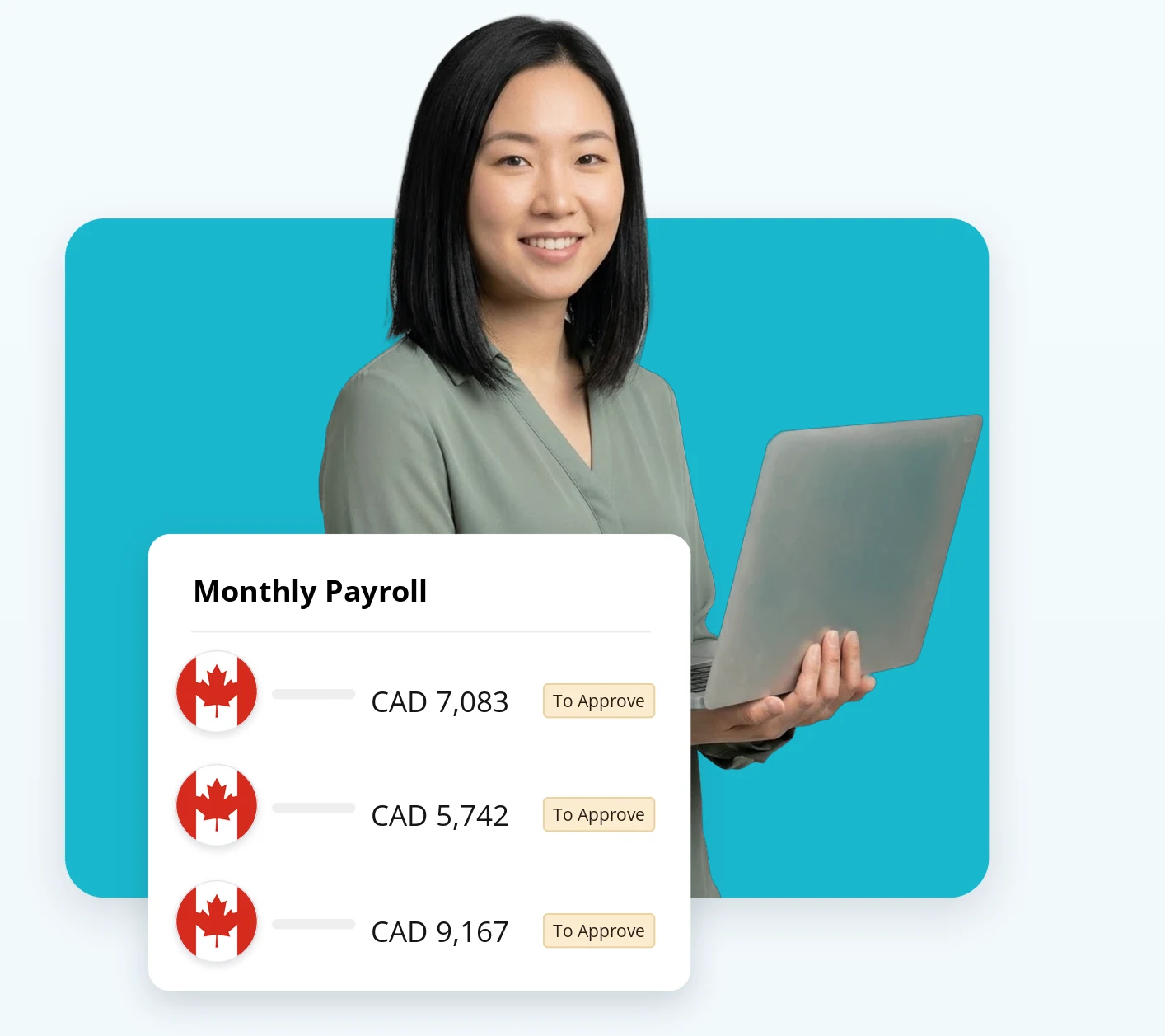
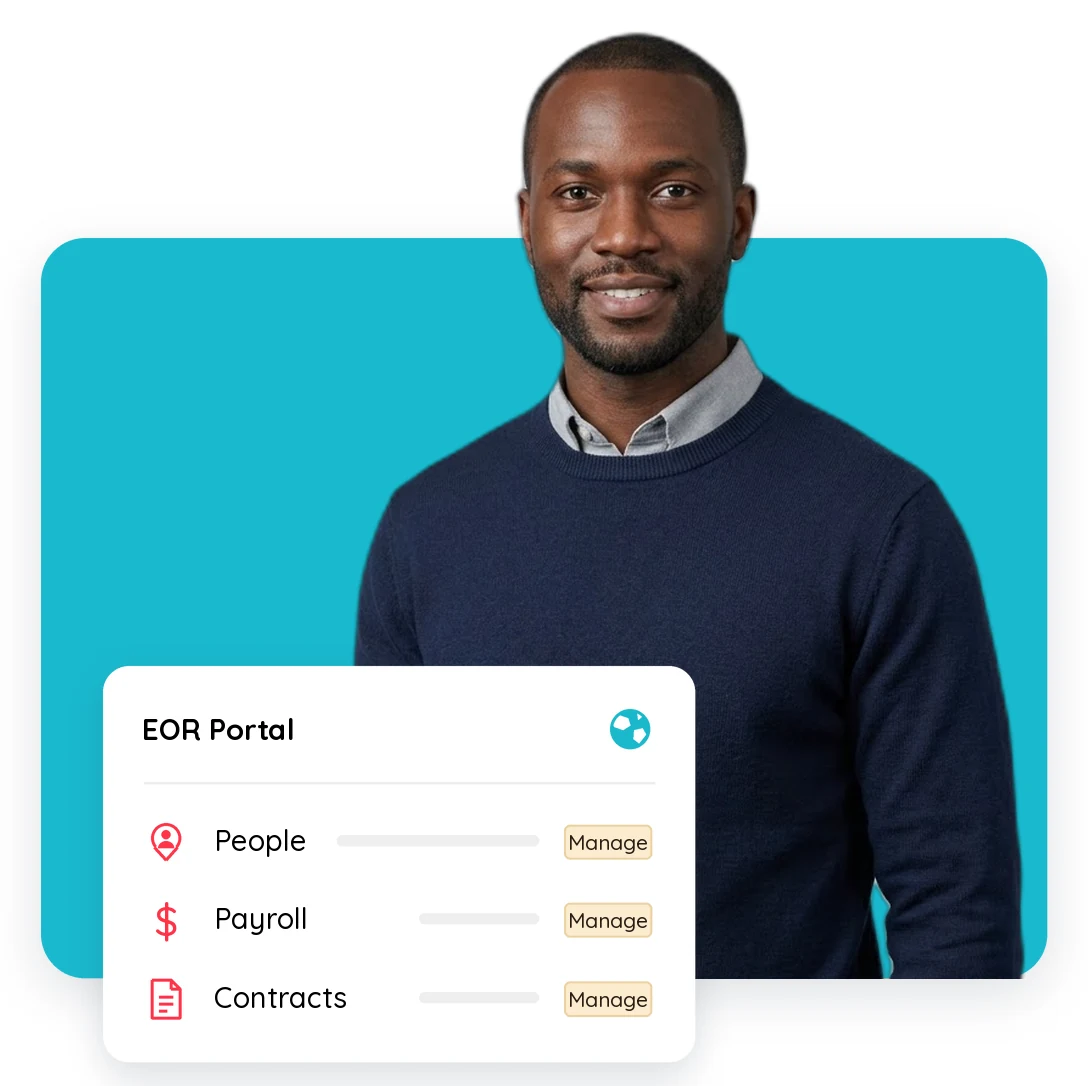
The portal holds every Canadian hire in one place. Behind it, a specialist who works on Canadian payroll every day checks each step, so a person reviews the figures before any pay run goes out.
- Track each hire’s progress, from accepted offer through TD1 forms to first payslip
- Approve the pay run before each pay day
- Record raises, leave and address changes as they happen
- Download T4 slips, pay statements and Records of Employment
How EOR Canada works
Who is the legal employer when you hire through us?
We employ your hire as employer of record and hold the CRA payroll account, while you set the work and the goals. One Ontario cost detail follows from this: the Employer Health Tax rate is set by the legal employer’s total Ontario payroll (1.95% above CAD 400,000 in 2026), so we show it as its own line.
EOR Canada registers each hire for payroll, sends income tax, CPP and EI to the CRA each month, normally by the 15th, and handles Employer Health Tax and WSIB premiums in Ontario or Revenu Québec and CNESST filings in Quebec. When someone leaves, it issues the Record of Employment through ROE Web and the final T4.
Employment costs
What does a CAD 85,000 Ontario hire cost the employer?
The rates below apply for the 2026 calendar year and come from the CRA, ESDC, WSIB and Ontario’s Ministry of Finance.
Employer costs on top of pay
On a CAD 85,000 Ontario salary the employer adds about 9.45% in 2026. The employer’s CPP share is 5.95% of pay between the CAD 3,500 exemption and the CAD 74,600 ceiling (up to CAD 4,230.45), CPP2 takes 4% of the slice from CAD 74,600 to CAD 85,000 (up to CAD 416) and EI is 2.282% up to CAD 68,900 (maximum CAD 1,572.30). Ontario adds Employer Health Tax of 0.98% to 1.95%, depending on the employer’s total payroll, and WSIB premiums by industry class (CAD 0.18 per CAD 100 for Class L; the 2026 average is CAD 1.23). Quebec replaces CPP with QPP at 6.30% and adds QPIP at 0.602% and the Health Services Fund.
Taken from the payslip
We deduct two items at source each pay period and remit them with the employer’s share.
- Income tax: federal rates from 14% to 33% and Ontario rates from 5.05% to 13.16%, plus the Ontario surtax and Health Premium, set from the employee’s TD1 and TD1ON forms.
- Contributions: the employee matches the employer’s CPP (5.95%, capped at CAD 4,230.45) and CPP2 (4%, capped at CAD 416) and pays EI at 1.63%, capped at CAD 1,123.07 for 2026. In Quebec the employee pays QPP at 6.30%, QPIP at 0.430% and EI at the lower 1.30% rate.
Worked example
CAD 85,000 salary, Ontario, 2026
Cost to employer
CAD 93,029
Gross salary with CPP, CPP2 and EI, 1.95% EHT and a Class L WSIB premium added: CAD 7,752.44 a month.
Net pay to employee
CAD 63,679
After federal and Ontario tax, Health Premium, CPP, CPP2 and EI: CAD 5,306.62 a month.
Assumptions: a full 2026 year with one Ontario employer, basic personal amounts only, no other income or benefits, and vacation pay inside salary. Employer Health Tax is 1.95%, assuming the employer’s Ontario payroll is above CAD 5 million; WSIB uses Class L at CAD 0.18 per CAD 100. Our fee is excluded; with it the total is CAD 102,515.97 a year.
Each month you pay one invoice covering gross pay, employer contributions and the monthly fee from USD 560 for each employee (CAD 790.56 using the ECB reference rates published on 24 September 2026). We pay your staff and send CRA remittances on the regular remitter schedule; Ontario EHT and WSIB premiums are paid on their own schedules.
Onboarding, then each pay run
Which steps come before day one, and which repeat monthly?

Some tasks happen once before the start date; others repeat on every pay run after it.
Before the first pay, we add the hire to our CRA payroll program account and collect the TD1 and TD1ON forms. An Ontario employer of 25 people or more has to hand over written details of pay, pay day, hours and work location before the first day, and every employee must receive the ESA poster within 30 days of hire.
We draft the contract from your offer under the employment standards of the province where the person works. Ontario bars non-competes below executive level, and a termination clause that meets the ESA can limit common-law notice, which can far exceed the ESA weeks. In Quebec, the Charter of the French Language requires employers to use French with staff, including documents on working conditions.
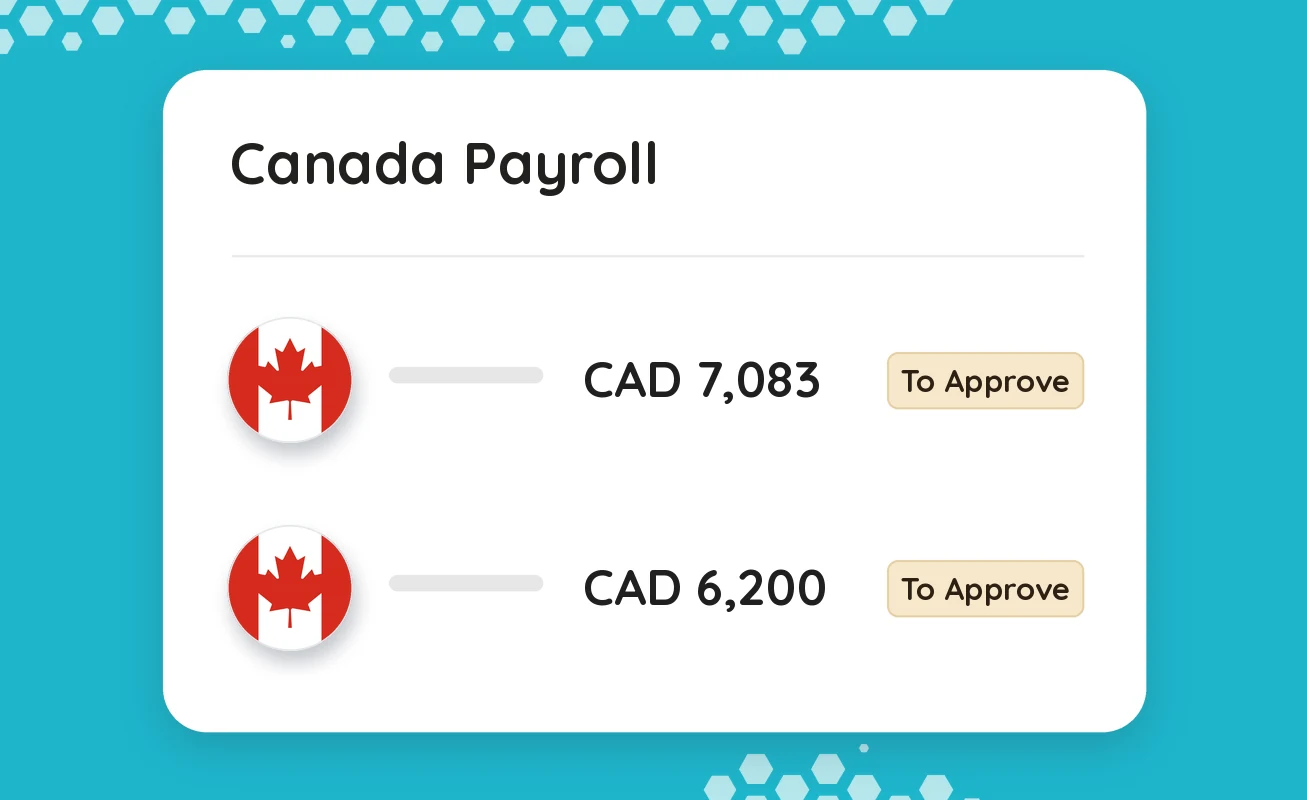
Every pay period we calculate gross pay and withhold income tax, CPP and EI using the CRA’s T4127 formulas, then remit on the CRA schedule; a regular remitter pays by the 15th of the next month. T4 slips and the T4 Summary go to the CRA by the end of February, and the Ontario Employer Health Tax annual return is due on 15 March. For Quebec staff, QPP and QPIP replace CPP and part of EI, and source deductions go to Revenu Québec.
Foreign hires need the right to work in Canada first. We cannot seek an LMIA, as the Temporary Foreign Worker Program does not treat staffing or employment agencies as employers, and intra-company transfers need a corporate link. Open permit holders, such as IEC Working Holiday, can be employed.
Employer-specific permits, such as IEC Young Professionals, name the employer, so we confirm the permit type and expiry date before any contract is issued.
The service suits office-based and remote roles such as software, finance, sales and customer support. Your sector sets the Ontario WSIB class, from CAD 0.18 per CAD 100 in Class L to CAD 1.43 in Class M, and federally regulated employers follow the Canada Labour Code in place of provincial law.
From signed offer to first pay day
How soon can your Canadian hire start work?
Incorporating online can take a day, yet the bank account, payroll and WSIB set-up follow after it. With an employer of record, the start date turns mainly on your hire’s notice.
Share the offer details
Tell us the role, salary, province and start date you agreed with your candidate.
Contract drafted for you
We prepare a contract that fits that province’s employment standards and send it for e-signature.
Right-to-work check
We confirm citizenship or permit status and collect the personal details payroll needs.
TD1 forms completed
Your hire completes the federal and provincial TD1 so the first withholding is right.
Added to our payroll
The person joins our CRA payroll account, with workers’ compensation in place.
First pay on schedule
Salary lands on the agreed pay day, with a payslip showing each deduction.

Your named payroll contact
Who answers when your Canadian team has a payroll question?
You deal with one named specialist throughout, from contract drafting until the year-end T4s, who knows how Ontario, Quebec and the other provinces differ.
Message LiamIncorporate or use an EOR?
Should you form a Canadian corporation or employ through us?
You can incorporate a federal corporation under the CBCA or a provincial one, register it in each province you hire in and run payroll yourself. Or we can employ the person for you as employer of record.
Your own Canadian corporation
Online federal incorporation through Corporations Canada costs CAD 200, and at least one director must be a resident Canadian when there are fewer than four. An Ontario corporation costs CAD 300; a federal one then registers in Ontario.
Filing fees are the small part; at one employee they cost less than our fee. Before the first pay you need a CRA business number and payroll account, then WSIB, Employer Health Tax once payroll passes its exemption, and Revenu Québec and CNESST accounts for Quebec staff.
- Monthly source deduction remittances
- Year-end T4 filing each February for every employee
- Records of Employment whenever someone leaves
- A CAD 12 annual return and director residency rules
- Ontario EHT return by 15 March and WSIB premium reporting
Employing through EOR Canada
We already run Canadian payroll, so your hire joins an existing CRA payroll account. You pick the candidate and set their tasks; we hold the contract and make the filings. Clients keep some exposure: Ontario and Quebec law can hold a client liable with the employer for unpaid wages.
- No incorporation or director hunt
- Payroll, remittances and T4s run for you
- Contracts written to provincial standards
- No company to wind up if plans change
- French-language paperwork for Quebec
Which route suits your plans?
When EOR suits
Use the service for your first hires in a province, for testing demand in Canada, or when a start date should not wait on company registrations. It also suits teams spread across several provinces, where one employer of record applies each province’s payroll rules and employment standards.
When your own corporation suits
Incorporate when you plan a sizeable Canadian team, need to support workers through an LMIA or intra-company transfer (which an EOR cannot do), or will trade in Canada under your own name. At that scale the filing fees and admin cost less than a monthly fee for each person.
Unsure which fits? Send us the province and headcount and we will set out both routes with 2026 figures.
Statutory minimums
What must an Ontario employer give every employee?
In Ontario the floor comes from the Employment Standards Act, 2000, enforced by the Ministry of Labour, Immigration, Training and Skills Development. Other provinces have their own statutes; federal sectors follow the Canada Labour Code.
Vacation
Ontario employees earn 2 weeks of vacation a year, rising to 3 weeks after 5 years, paid at no less than 4% of gross wages, or 6% once the 5 years are reached. Quebec gives 3 weeks from 3 years of service.
Public holidays
Ontario has 9 ESA public holidays in 2026, from New Year’s Day to Boxing Day; the August Civic Holiday is not one of them. Quebec observes 8, including Fête nationale on 24 June.
Sick leave
After 2 consecutive weeks on the job, an Ontario employee may take 3 sick days a year, unpaid but with the job protected, and since 28 October 2024 an employer may not ask for a medical note for them. Long-term illness leave of up to 27 unpaid weeks follows after 13 weeks of service. Elsewhere the rules change: a British Columbia worker earns 5 paid and 3 unpaid days once 90 days are served, and staff in federal sectors can claim as many as 10 paid days. Paid sick days above the Ontario minimum can be written into the contract if you want to offer them.
Pregnancy leave
Ontario allows up to 17 weeks of unpaid, job-protected pregnancy leave. Income comes from EI maternity benefits for up to 15 weeks at 55% of earnings, capped at CAD 729 a week; Quebec parents claim from QPIP.
Parental leave
Parents can take up to 61 weeks of unpaid parental leave after pregnancy leave, or 63 weeks otherwise. EI parental benefits last up to 40 standard or 69 extended weeks, shared.
Family leave types
The ESA also protects time off for family caregiving, family medical needs, critical illness, bereavement and domestic or sexual violence, among others. From 27 November 2025, staff given notice in a mass termination can take 3 unpaid days to look for work.
How we apply these for you
Our payroll tracks vacation accrual and vacation pay, applies public holiday pay for each province and records every leave so job protection and benefit continuation are kept. When someone starts EI or QPIP benefits, we issue the Record of Employment the claim needs.
What we cover
Our Canadian services
Our Employer of Record Canada service covers employment, payroll and HR administration for staff in any province, with us acting as the legal employer. The services page sets out each part with its provincial detail.
See services ›Employment without a Canadian corporation
We employ your hire as employer of record, so you can start in Ontario, Quebec or another province without incorporating or registering extra-provincially.
Payroll, source deductions and T4s
Pay runs with federal and provincial tax, CPP or QPP, EI and QPIP deducted and remitted, plus year-end T4 slips and payslips your staff can follow.
HR and employment standards
Contracts, leave records, policy duties such as Ontario’s disconnecting-from-work rule, and exits handled with the notice each province’s statute sets.
Benefit plans on top of the minimum
Employer benefit plans can be added above the statutory minimum when you want your Canadian offer to match what local employers give.

Employing in Canada guide
Read our guide toprovincial payroll|in Canada
The Employing in Canada guide covers hiring, pay, leave and termination province by province, with Ontario figures as the default and notes for British Columbia, Alberta and Quebec. Each figure names its source and year.
Open the Canada hiring guide ›Our approach
What does working with EOR Canada look like?
Our Employer of Record Canada service starts with figures: a cost sheet for the province your hire works in, with every rate sourced. The service is billed from USD 560 a month for each employee, and one named specialist answers your questions.
Ask for costsBefore you book
No. The legal employer is EOR Canada, as employer of record, and we also run payroll, so you can hire before, or instead of, incorporating. You need your own corporation to support an LMIA or intra-company transfer.
The purpose differs: a temporary help agency assigns its workers to clients, while we employ a person you chose. Since 1 July 2024 Ontario licenses temporary help agencies and recruiters, and clients must not knowingly use an unlicensed one; Quebec licenses placement agencies through the CNESST. We check how those rules apply before your hire starts.
Once you share the offer, the start date depends mostly on the person's notice to their current employer and on any work permit. Our CRA payroll account already exists, so no incorporation or payroll registration stands in the way.
from USD 560 a month for each employee (roughly CAD 790.56 on 24 September 2026 ECB rates), on top of salary and employer contributions. On a CAD 85,000 Ontario salary those contributions add about 9.45% in 2026, so the yearly figure is CAD 102,515.97 with our fee. A one-off set-up fee is usually charged at the start. Hiring outside Canada too? Ask us what we can cover.
Got a Canadian candidate in mind?
Give us the province, pay and planned start, and we will send a cost sheet built on 2026 CRA and provincial rates.
Toronto, Montréal, Calgary or Vancouver: one contract, one invoice, each province's own payroll rules.
Request a cost sheet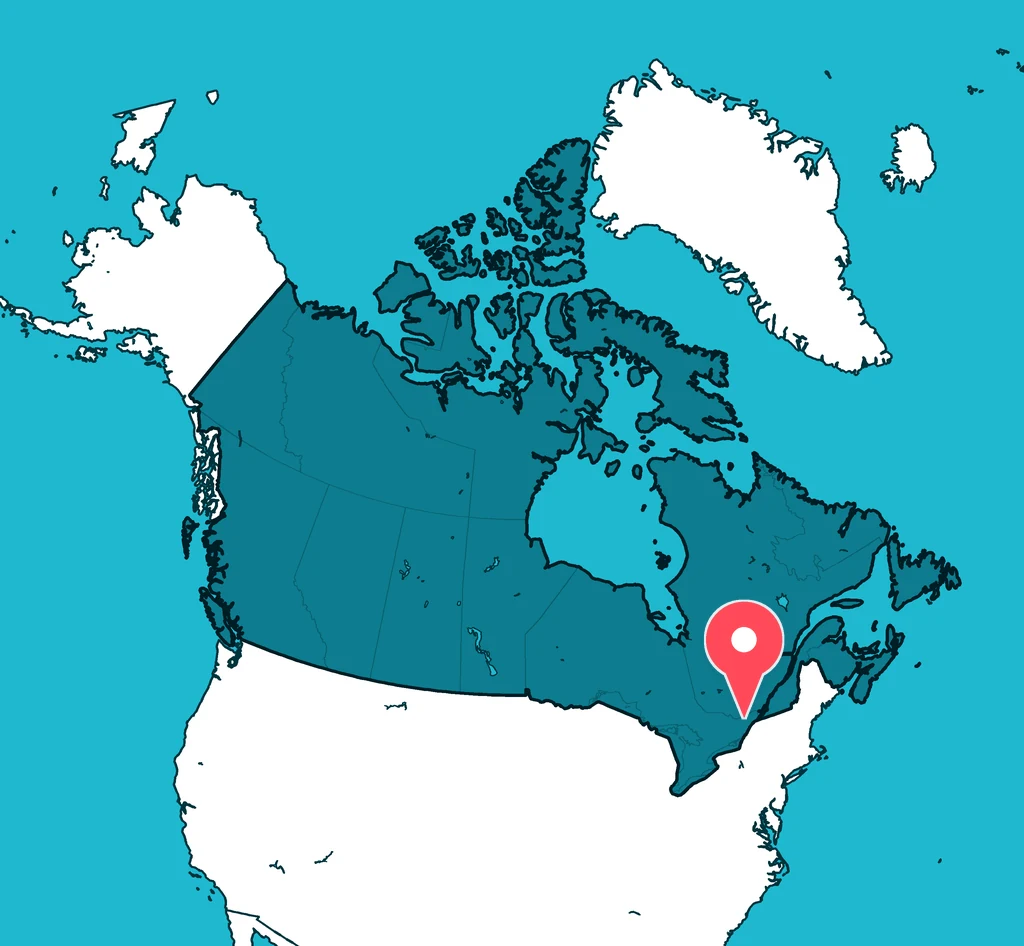
Book a call
Plan your first Canadian hire with us
Leave your details and a payroll specialist will reply with costs for the province you name.